Micro-Hydro Power 101: Generating Renewable Energy from Small Streams

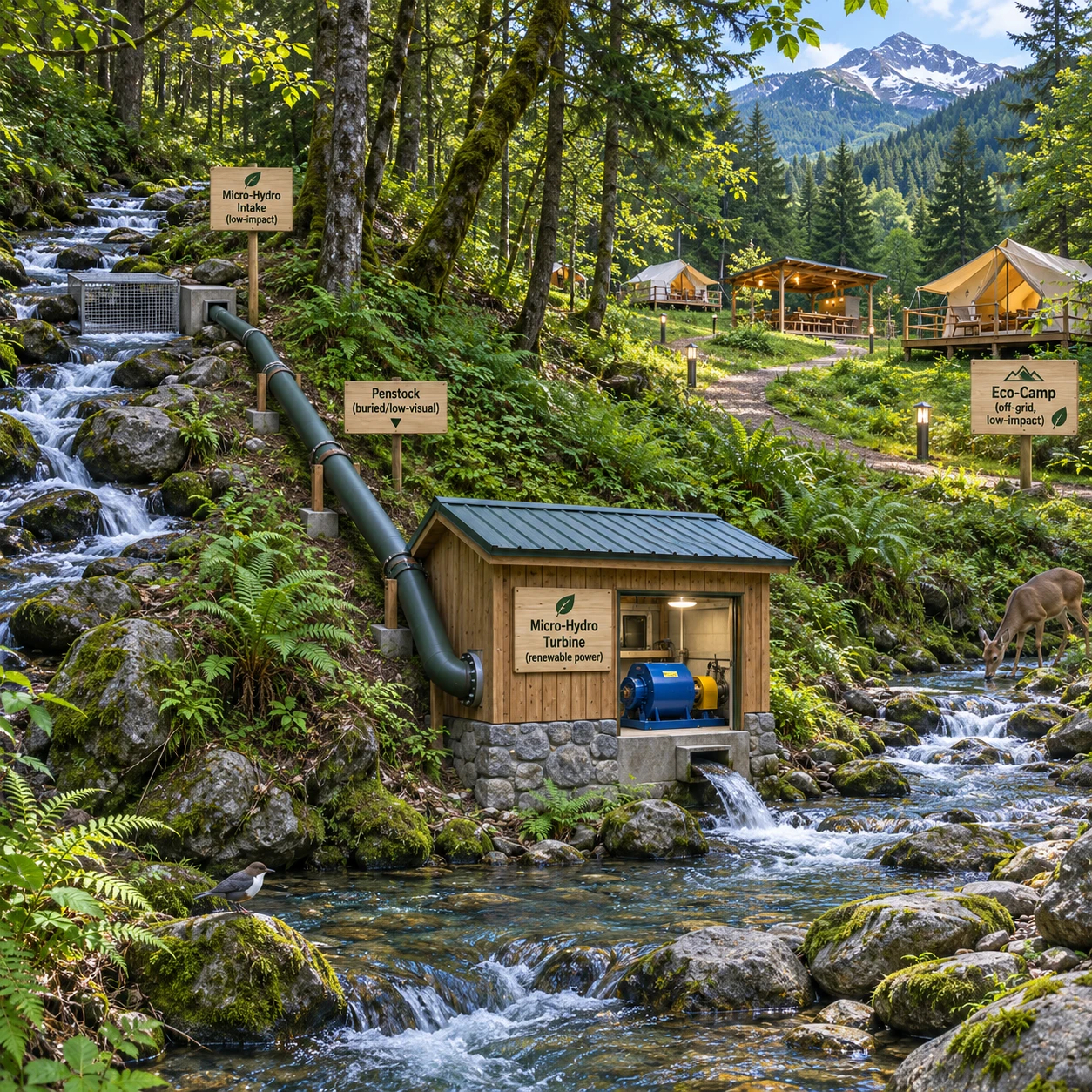
A remote camp can be a place to watch wildlife, launch a kayak, and experience a landscape without the hum of a generator. Micro-hydro power may help supply electricity in such settings, but it depends on the stream, the site, and careful planning. A small waterway is a living habitat first; its energy potential must be assessed alongside ecological needs, water quality, safety, and local requirements.
What Is Micro-Hydro Power?
Micro-hydro power is small-scale hydropower that converts flowing water into electricity, often for a home, remote cabin, or camp. Unlike a large dam, many micro-hydro systems use a small intake and a pipeline to direct part of a stream’s flow through a turbine, then return the water downstream.
The basic resource is moving water. Its potential depends mainly on two factors: flow, the volume of water passing a point over time, and head, the vertical drop available between the intake and the turbine. A steep stream with modest flow may be useful; a high-volume stream with little elevation change may be less practical. Neither condition alone guarantees a suitable site.
Micro-hydro can provide steady power when a stream flows consistently, which can be useful where sunlight is limited or winter days are short. That reliability comes with a trade-off: the system is tied to a particular waterway and may produce less during dry seasons or freeze-up. It also requires equipment, access for maintenance, and responsible water management. It is not simply a smaller version of a large hydropower dam, nor is every stream an appropriate energy source.
How a Micro-Hydro System Generates Electricity
A micro-hydro system guides water from a stream through a turbine, which spins a generator to produce electricity. The main components are an intake, a penstock (the pipe carrying water downhill), a turbine, a generator, and electrical controls.
At the intake, a screen or other protective design may keep large debris from entering the pipeline. Water then travels through the penstock, gaining pressure from the drop in elevation. At the turbine, the moving water turns a runner or wheel. The generator converts that rotation into electrical energy, which a system may use directly or regulate for storage and later use.
A charge controller manages electricity flowing to a battery bank in systems designed for energy storage. Other equipment, such as an inverter, may convert electricity into the form needed by appliances. The exact setup depends on the turbine, generator, electrical loads, and whether the system connects to storage or a wider power supply.
Water leaving the turbine typically returns to the stream, but the section between the intake and return point can have reduced flow. That reach, often called a bypass reach, matters ecologically. The system’s water use and design should preserve appropriate flow for the stream rather than assuming all available water can be diverted. Electrical work also carries hazards, so equipment should be installed and inspected by people qualified for the site and system.
Is Your Stream a Good Fit?
A stream is a good fit for micro-hydro only when its usable flow, water head, seasonal pattern, access, and ecological constraints work together. A quick look at a waterfall or a rainy-day current cannot establish year-round potential.
Start by considering the site as a whole:
- Measure flow: Estimate how much water is available during different seasons, including low-flow periods. The amount that can be diverted may be limited by ecological needs or local rules.
- Measure head: Determine the vertical drop between the proposed intake and turbine location. More head can increase the energy available, but a long or difficult route for the penstock can add cost and maintenance.
- Track seasonal variation: Drought, snowmelt, storms, ice, and seasonal rainfall can change flow. Design around dependable conditions, not the stream’s peak after a storm.
- Check access and terrain: The intake, pipe route, turbine, and electrical equipment need safe access for installation and upkeep. Steep banks and flood-prone areas complicate the work.
- Look for ecological constraints: Fish passage, aquatic habitat, sensitive species, and the amount of water left in the channel can affect whether a project is appropriate.
Output depends on the combination of flow and head, along with losses from pipes, fittings, and equipment. For that reason, broad rules of thumb cannot promise a particular power output. A qualified site assessment and measurements across relevant seasons are more useful than choosing a turbine based on stream appearance alone.
Choosing Components and Using the Power
Choose micro-hydro components to match measured site conditions and the electrical loads you actually need. A turbine suited to one combination of flow and head may perform poorly at another, so system design should follow assessment rather than guesswork.
For an off-grid basecamp, list essential uses first: lighting, communication devices, small electronics, or equipment for water treatment. Then estimate when each load runs and whether it needs power during periods of low stream flow. A battery bank can store energy for short gaps between generation and use, though batteries add cost, space, replacement needs, and end-of-life responsibilities. A system without storage may need loads that can operate as power is generated.
In an eco-adventure setting, reliable electricity might support safety communications, a modest lighting plan, or carefully selected camp equipment. It does not automatically make an energy-intensive facility low-impact. Choosing more capacity can mean larger equipment, greater construction disturbance, and more maintenance. Keep the system aligned with a clear need and the smallest practical site footprint.
Water filtration is a separate part of camp planning. A turbine generates electricity; it does not make stream water safe to drink. Treat drinking water with a method appropriate to local contaminants and public-health guidance, and protect the source from fuel, waste, and runoff. If electricity powers a treatment device, the filtration system still needs its own design, operation, and maintenance plan.
Protecting Wildlife and Water Quality
Responsible micro-hydro planning protects stream flow, aquatic habitat, wildlife, and water quality throughout construction and operation. Electricity generation and environmental care must be considered together, but a low-impact design does not mean zero impact.
Fish, aquatic insects, amphibians, and riparian wildlife depend on suitable water levels, movement, temperature, and habitat. An intake can create risks if it draws organisms in or blocks movement, while construction can disturb stream banks and sediment. Screening, fish passage considerations, careful siting, and a suitable bypass flow may help reduce impacts, but the right measures depend on local species and conditions.
For a kayak route or wildlife-viewing basecamp, keep equipment away from sensitive banks and avoid work during vulnerable seasons identified by local specialists. Plan for floods and debris without channelizing the stream or placing structures where they could damage habitat. Monitor the intake and bypass reach as conditions change; an adjustment that seems minor during one season may matter during low flow.
Protect water quality separately from energy production. Secure fuels and lubricants, manage sanitation and waste, and prevent sediment from entering the stream during installation. Water filtration should be selected for the intended use and verified against likely hazards. A clear-looking stream is not proof that the water is safe to drink.
Planning for Safe, Responsible Installation
Plan a micro-hydro installation with local permissions, qualified technical guidance, worker safety, ecological review, and ongoing maintenance in mind. Requirements vary by location and site, so check with relevant authorities before altering a stream or building infrastructure.
Before committing, document the proposed intake and return points, penstock route, access needs, expected seasonal operation, and potential effects on water users and habitat. Ask local agencies or qualified professionals which approvals, assessments, or consultations may apply. A site that looks simple can involve land rights, water use, electrical safety, construction, and environmental considerations.
Installation risks include slippery banks, sudden high water, falling debris, pressure in the penstock, and electrical shock. Use appropriate safety procedures and have electrical and mechanical work reviewed by qualified people. Maintenance should include checking screens, pipes, turbine parts, connections, and batteries where used. Build in a safe way to shut down or isolate equipment for inspection.
Common planning mistakes are easy to avoid:
- Designing for peak flow: A storm may create impressive flow that is unavailable most of the year. Use seasonal measurements and plan for dependable conditions.
- Ignoring the bypass reach: Diverting too much water can harm habitat. Determine appropriate flow requirements before selecting system capacity.
- Assuming power means potable water: Electricity generation does not remove pathogens or contaminants. Use a separate, properly maintained water-treatment method.
Micro-hydro can suit a remote basecamp when the stream can support it and the project’s ecological, legal, and practical costs are acceptable. If those conditions do not align, a different renewable-energy option may fit the site better.
Micro-Hydro Power FAQs
These answers summarize the main factors that shape a small-stream system: available flow and head, intended loads, dam requirements, ecological safeguards, and separate water treatment.
What stream conditions affect micro-hydro output?
Output depends chiefly on usable stream flow and water head, along with losses in the penstock and the efficiency of the turbine and generator. Seasonal variation matters: a system sized for high-water periods may produce much less during a dry season.
Can a small stream power an off-grid cabin or camp?
Possibly, if the stream has reliable usable flow and sufficient head, and the system is matched to the camp’s needs. Measure the site and estimate loads first; no particular output or suitability can be assumed from stream size alone.
Does micro-hydro require a dam?
Many small systems can operate without a large dam by diverting some water through an intake and penstock, then returning it downstream. They may still require structures or changes in the stream, which need careful ecological and regulatory review.
How can a system reduce impacts on wildlife?
Assess local habitat and species, site components carefully, limit construction disturbance, consider intake screening and fish passage, and maintain suitable flow in the bypass reach. The effective measures depend on the stream and should be guided by qualified local expertise.
Is electricity generation the same as water filtration?
No. A turbine and generator produce electricity; they do not remove pathogens or chemical contaminants. Treat drinking water with an appropriate filtration or disinfection system and maintain it separately.